
Since the outbreak of the war in Ukraine, international discourse has undergone a process of militarisation. Concepts such as deterrence, rearmament, strategic competition, and military escalation have re-emerged at the centre of political debate, signalling the return of a lexicon assumed to belong to the history of the twentieth century. “Peace” has progressively disappeared from mainstream political discourse both in Europe and the United States (US), surviving mainly within pacifist movements and some actors of the Global South.
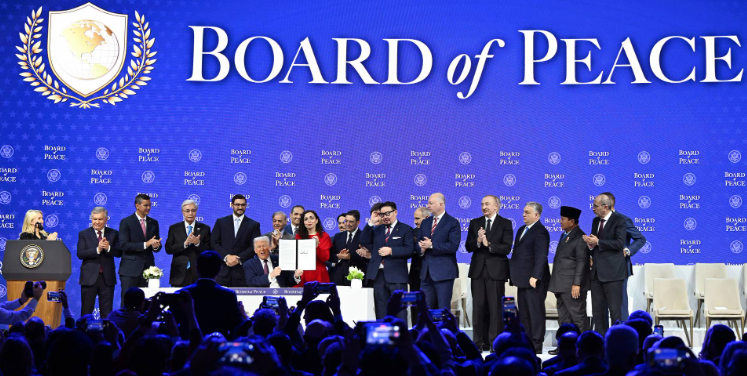
Donald Trump’s return to the White House marked a reversal of this trajectory. Presenting himself as the “President of peace”, his administration claimed responsibility for the de-escalation or resolution of “eight conflicts in eight months”. In early 2026, this narrative was institutionalised through the launch of the “Board of Peace”, presented as a new international organisation designed for conflict resolution.
Although at first glance these initiatives appear to signal a renewed commitment to peace, a closer examination suggests a different dynamic. Most of the arrangements promoted under the US administration take the form of ceasefires, diplomatic understandings, or limited normalisation agreements. They prioritise rapid stabilisation and political visibility over long-term transformation, social reconciliation, and institutional reform.
Moreover, rather than reviving comprehensive peace-making, these practices point to the consolidation of a specific model of conflict management. This article analyses four agreements or declarations — India–Pakistan, Cambodia–Thailand, Armenia–Azerbaijan, and Democratic Republic of Congo–Rwanda — facilitated by Trump in 2025 in order to clarify their relationship with the Board of Peace.
The analysis suggests that, on the one hand, the Board might have been conceived as the institutional instrument meant to operationalise a new method of peace-making already visible in those agreements. On the other hand, it has evolved beyond that original function. A substantial difference emerges between the Board of Peace as reflected in Resolution 2803 and the version presented in January 2026. In its latest configuration, the Board no longer appears merely as a mechanism supporting specific arrangements, but advances broader claims to governance authority.
